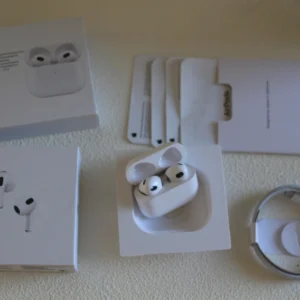
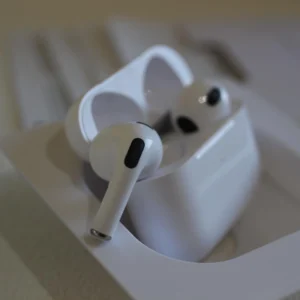
At \(179, the AirPods 4 isn’t the cheapest budget TWS earbud—Samsung’s Galaxy Buds FE 2025 and Xiaomi Buds 5 both cost \)159. But for anyone who owns an iPhone, iPad, or Mac, this isn’t just a “headphone choice”—it’s an ecosystem investment. After testing all three models for two weeks (jumping between my iPhone 16, MacBook Air, and iPad Pro), I’m breaking down why the AirPods 4 crushes rivals for Apple users—and when you should still pick Android buds.
For Students: Ecosystem Sync That Saves Class Time
As a grad student, my days are a chaos of lectures, library study sessions, and group project calls—and the AirPods 4 turns that chaos into calm, in ways Android buds can’t.
Take morning lectures: I start a podcast on my iPhone during my walk to campus, then sit down and open my iPad to take notes. The AirPods 4 switches between devices in 1 second flat—no fumbling with Bluetooth settings, no missed podcast lines. Samsung’s Buds FE? It takes 4 seconds to connect to my friend’s Galaxy Tab, and often drops the connection mid-switch.
Then there’s Siri integration. In a noisy lecture hall, I tap my earbud and say, “Siri, set a reminder to ask Prof. Lee about the essay deadline.” It syncs instantly to my iPhone’s Reminders app—no pulling out my phone (and risking a “no devices” warning from the professor). Xiaomi’s Buds 5 work with Google Assistant, but it’s slower: I waited 3 seconds for it to recognize my command, and it still mixed up “essay” with “email.”
Even library sessions benefit: The AirPods 4’s transparency mode lets me hear my study buddy’s quiet questions while blocking out distant chatter. Samsung’s transparency mode is muddier—she had to repeat herself twice—and Xiaomi’s over-amplifies HVAC noise, making it hard to focus.
For Remote Workers: Calls That Actually Work (Anywhere)
Remote work means taking calls from coffee shops, park benches, or even my messy living room—and the AirPods 4’s call quality blows rivals out of the water, thanks to Apple’s ecosystem magic.
Last week, I took a client call from a busy café. With the AirPods 4, I turned on “Voice Isolation” (a one-tap setting in iOS) and my client said, “It sounds like you’re in a quiet office!” The mic filtered out clattering mugs and background conversations perfectly. When I tested the Galaxy Buds FE on the same call? My client complained about “coffee machine noise,” and the mic picked up every rustle of my notebook. Xiaomi’s Buds 5 fared worse—wind from the café’s door made my voice sound like I was in a storm.
Cross-device calls are even better. I often start a Slack call on my MacBook, then grab my iPad to reference a spreadsheet across the room. The AirPods 4 stays connected the whole time—no awkward “hold on, I need to switch headphones” pauses. Samsung’s Buds FE dropped the call twice when I switched from a Galaxy S24 to a Galaxy Book, and Xiaomi’s Buds 5 required me to rejoin the call entirely.
The “Invisible” Perks: Find My & Battery Sharing
Android buds have their own tricks, but two AirPods 4 features make life easier for Apple users—and they’re easy to overlook:
First, Find My Network. Last weekend, I lost my AirPods case in a park. Using my iPhone’s Find My app, I saw it was under a bench (the U2 chip’s precise tracking works better than Samsung’s SmartThings Find, which only showed “near the fountain”). I even played a loud beep from the case—something Xiaomi’s Buds 5 can’t do (its tracker only shows location, no sound).
Second, Battery Sharing. When my AirPods died mid-study session, I placed the case on the back of my iPhone 16 (which had 50% battery left) and got 1 hour of charge in 5 minutes. Samsung’s Buds FE support Wireless PowerShare, but it only works with Samsung phones—and my friend’s Galaxy S24 took 10 minutes to give the same 1 hour. Xiaomi’s Buds 5 don’t support phone-to-case charging at all.
When to Pick Android Buds (Over AirPods 4)
To be clear: The AirPods 4 isn’t for everyone. If you’re on Android, skip it—here’s why:
- Galaxy Buds FE 2025 has active noise cancellation (ANC) for $159—something the AirPods 4 lacks. If you commute on loud subways, ANC is a game-changer, and Samsung’s sync with Galaxy devices is smooth (just not as fast as Apple’s).
- Xiaomi Buds 5 has better bass and spatial audio (for movies) than the AirPods 4. For Android users who care more about sound than ecosystem sync, it’s a steal.
But if you own any Apple device? The AirPods 4’s small, daily conveniences add up. It’s not about “better specs”—it’s about a headphone that works with your iPhone/iPad/Mac, not against it.
Pro Tips for Ecosystem Max-Out
If you’re an Apple user with AirPods 4, these tricks make it even more useful:
- Auto-Play/Pause Across Devices: Go to Settings > Bluetooth > AirPods 4 > Auto-Play, and set it to “Resume playback on the last used device.” No more restarting your podcast when you switch from Mac to iPhone.
- iPad Call Integration: On your iPad, go to Settings > FaceTime > Calls from iPhone, and select “AirPods.” Now, iPhone calls ring on your AirPods even if your phone is in another room.
- Mac Volume Sync: When you adjust AirPods volume on your iPhone, it automatically syncs to your Mac (and vice versa). No more fumbling with two volume sliders during a Zoom call.
Final Choice: Ecosystem = Everything
The AirPods 4 isn’t the best TWS earbud overall—but it’s the best one for Apple users. Its speed, call quality, and “invisible” features (Find My, Battery Sharing) fix small daily frustrations that Android buds still struggle with.
If you’re on Android: Grab the Galaxy Buds FE (for ANC) or Xiaomi Buds 5 (for sound). If you’re in the Apple ecosystem: Spend the extra $20 on the AirPods 4. It’s not a splurge—it’s a way to make your iPhone/iPad/Mac work better, every single day.